People often hear the word system and imagine something complicated.
A project management tool. A dashboard. An automation. A folder structure with twenty rules. Maybe an SOP nobody wants to read.
But most useful systems are much simpler than that.
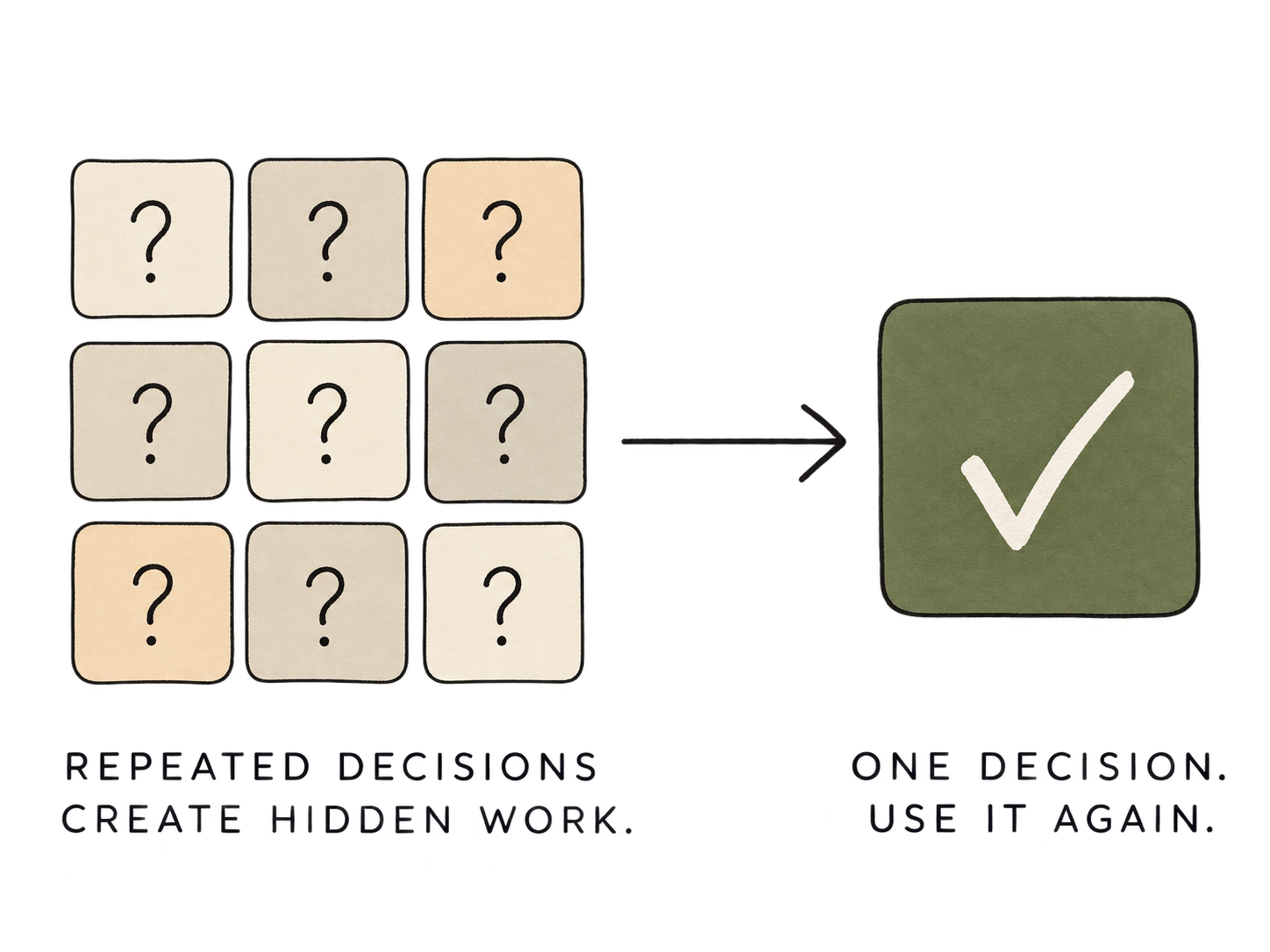
A system is often just a decision you made once so you don’t have to keep making it again.
That can be as small as deciding how you name files, where client feedback goes, when you send reports or what happens after someone fills out a form.
The value comes from repetition.
Repeated decisions quietly create a lot of work
Some tasks feel small because each individual decision only takes a minute.
Where should I save this file?
What do I send this client now?
Which version is the latest one?
When do I follow up?
How do I prepare this report again?
None of these questions are difficult. The problem is having to answer them over and over.
Over time, that creates a surprising amount of mental noise.
I have noticed this especially in work that repeats every week or every month. The task itself often isn’t the exhausting part. The exhaustion comes from rebuilding the process every time.
A system starts when you decide what should happen next
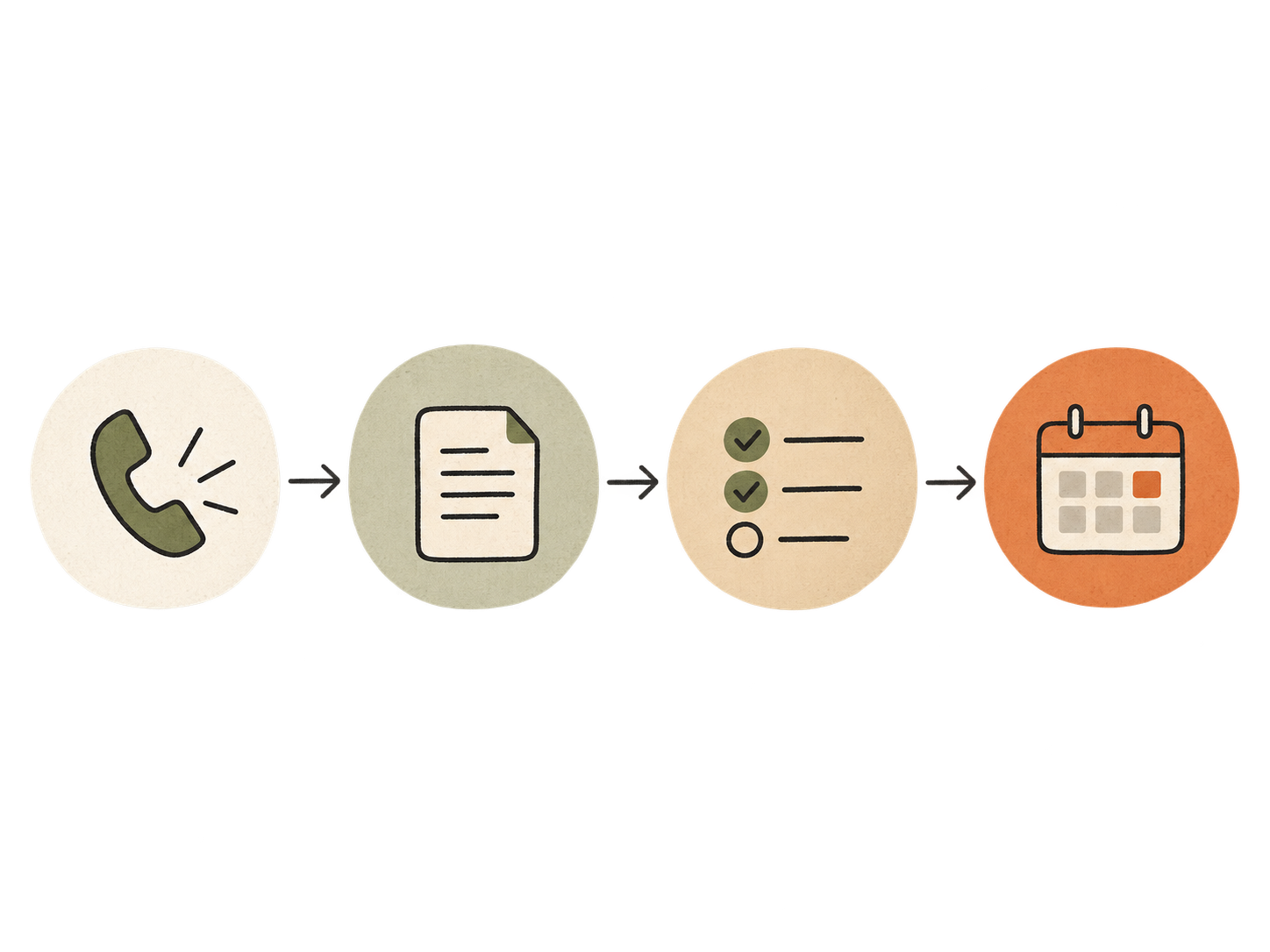
Imagine that every time you finish a client call, you have to remember what to do with your notes.
Maybe sometimes they go into a Google Doc. Sometimes you leave them in your notebook. Sometimes you send yourself an email. Two weeks later, you are looking for something and have no idea where it ended up.
A simple system could be:
- After every client call, notes go into the client project.
- Action items are moved into the task list.
- Anything waiting on the client gets a follow-up date.
That is not sophisticated.
But the next time you finish a call, you already know what happens.
You have removed three decisions from your day.
Start with the things that annoy you repeatedly
I think this is one of the easiest ways to find where you need systems.
Pay attention to the moments when you think:
Where did I put that again?
How did I do this last time?
I know there is something I always forget here.
Why am I doing this manually again?
Those little annoyances are useful signals.
You do not need to redesign your entire way of working. Pick one repeated problem and decide what the default should be from now on.
Maybe every new client gets the same folder structure.
Maybe invoices are always created on the same day.
Maybe every content idea goes into one place.
Maybe every campaign starts from the same checklist.
Small systems accumulate.
The best systems make work easier to start
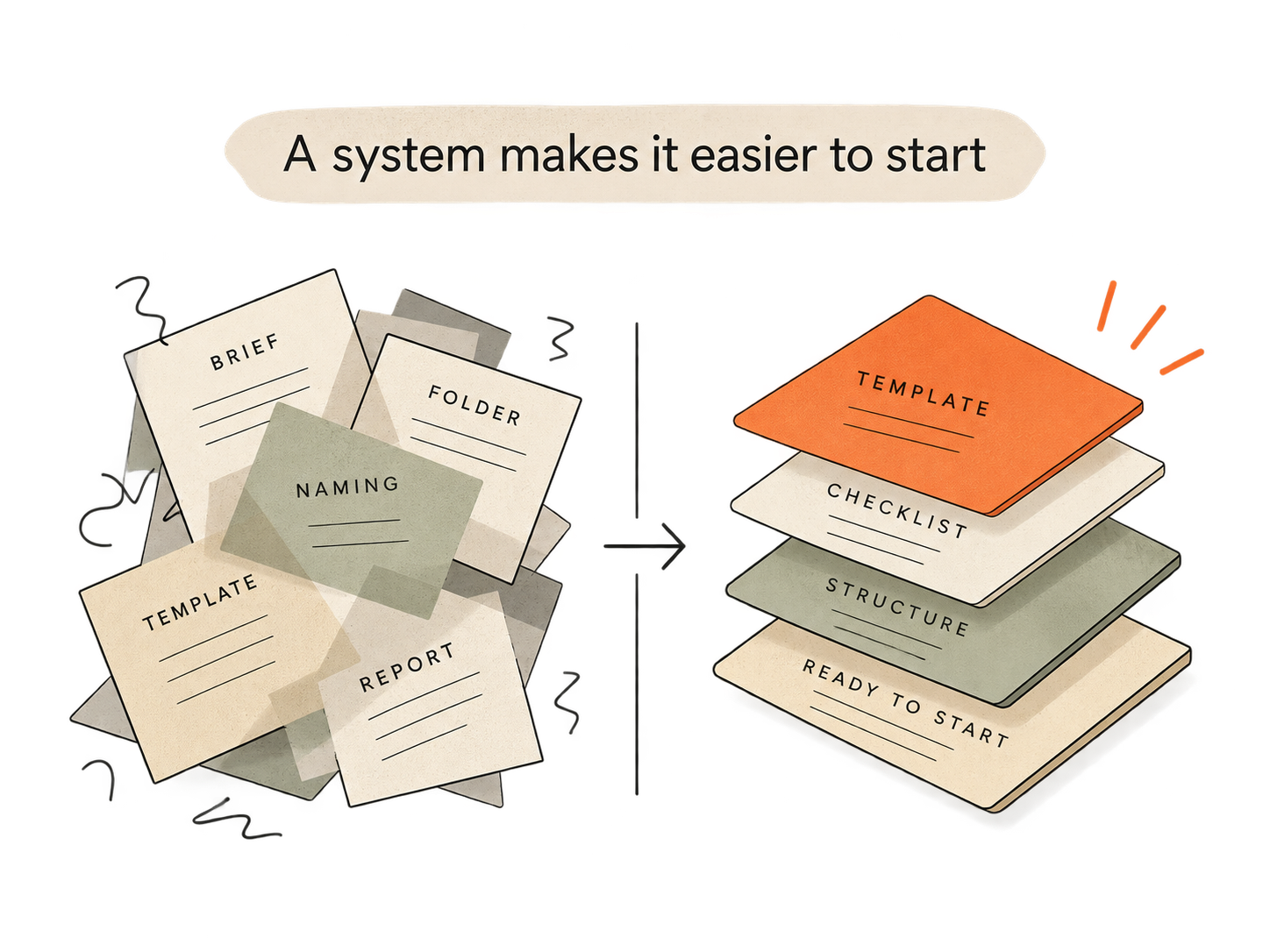
A good system does more than save time. It lowers the amount of effort required to begin.
If I sit down to create a campaign and already have the brief, checklist, naming structure and reporting template ready, I can spend more energy on the part that actually requires thinking.
If I have to reconstruct all of that first, I have already used some of my attention before the important work begins.
That is why systems become especially valuable as your workload grows. You stop spending your best energy on decisions that should have been settled months ago.
A useful question
The next time you catch yourself doing something familiar, ask:
Have I already made this decision before?
If the answer is yes, there is probably a system hiding there.
Write down the default. Put it somewhere you will actually use it. Keep it simple enough that following it is easier than ignoring it.
You can always improve it later.
The first version only needs to save you from making the same decision again tomorrow.