Positioning sounds like a big brand word. Something reserved for strategy decks, workshops and companies with large budgets.
But in practice, positioning is much simpler than that.
It is the answer to a very human question:
Why should this person choose you, pay attention to you, or remember you?
The answer can be simple. In fact, that usually helps.
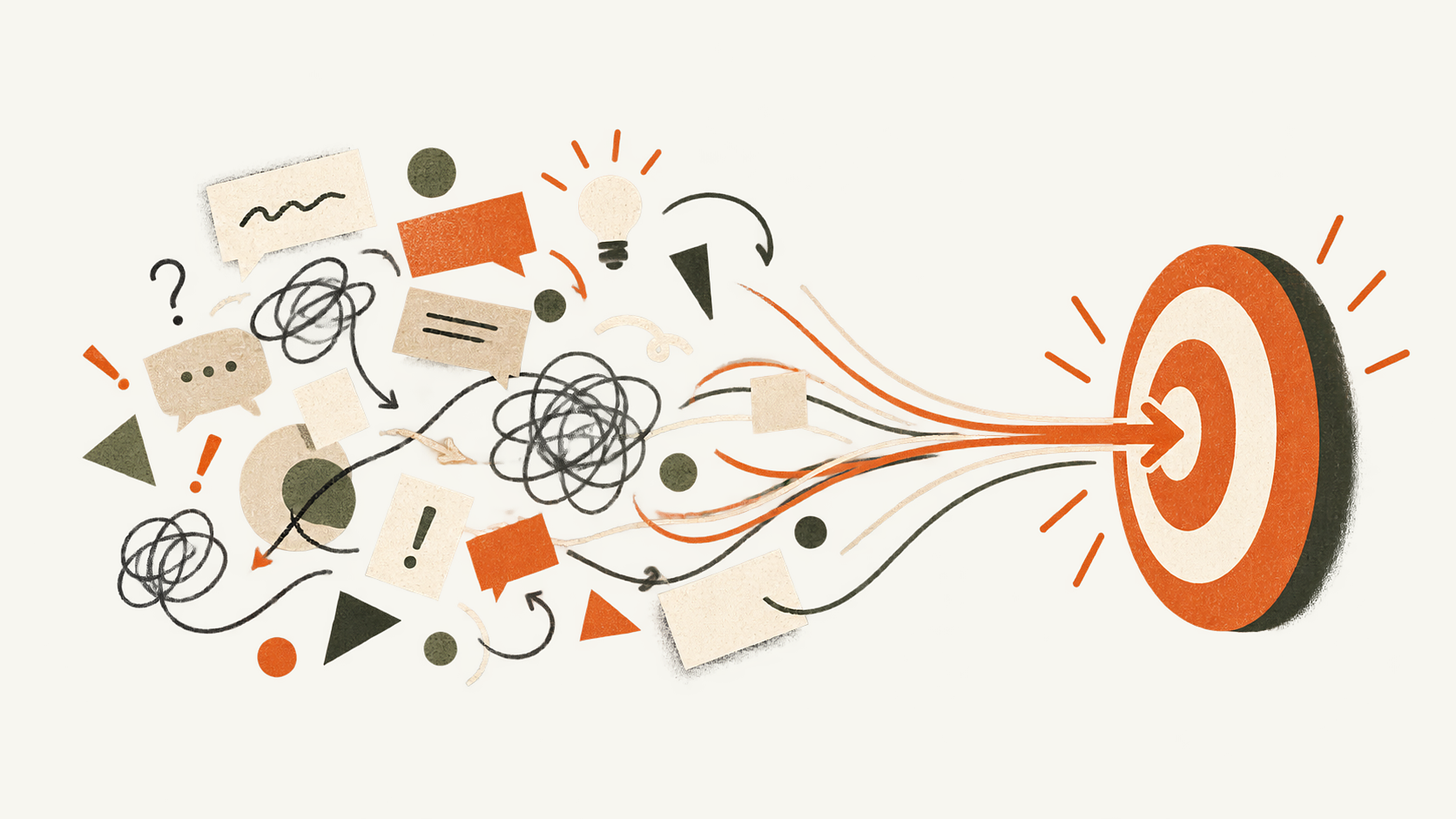
A lot of people, especially creative people, assume that being interesting is enough. So they write vague taglines, abstract bios and clever one-liners that sound good for a second but explain very little. The result is usually the same. People look, nod politely, and move on because the message made them work too hard.
Clear beats clever because people are busy
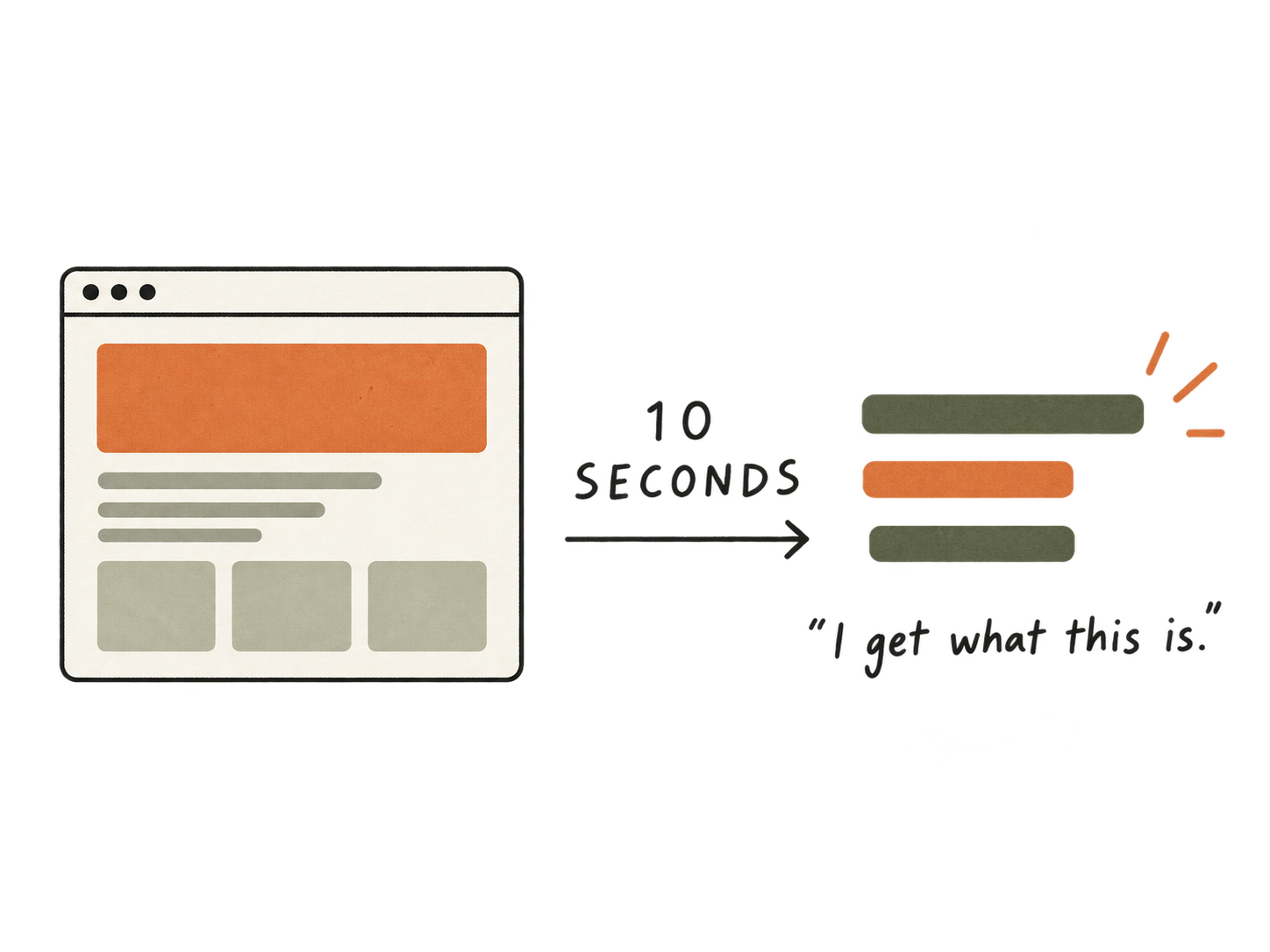
People rarely study your website in detail. Most of the time, they scan.
They are checking if you are relevant, if you understand their problem and if you feel specific enough to trust.
That means your positioning has one job first: reduce confusion.
Before people care how original your phrasing is, they need to know things like:
- what you do
- who you help
- what kind of outcome you help create
- why your way might be worth paying attention to
If any of that is blurry, clever wording will not save it.
In fact, clever wording can sometimes hide the problem. It creates a nice surface over a weak signal.
Good positioning makes people feel oriented
The best positioning often feels almost boring when you first write it.
That is normal.
Its job is to orient the other person quickly. When someone lands on your page, reads your intro or hears you explain your work, they should feel a small sense of relief. They should think:
Ah, I get it. This is for someone like me.
That moment matters more than originality.
Once the idea is clear, there is plenty of room for personality.
A simple test
A useful positioning test is this:
Can a real person repeat back what you do after ten seconds?
They do not need to remember your exact wording. You just want them to carry the essence.
For example:
- “He helps small brands clarify their message and attract better clients.”
- “She designs systems that make content and operations easier to run.”
- “He teaches practical marketing without the usual noise.”
That is enough.
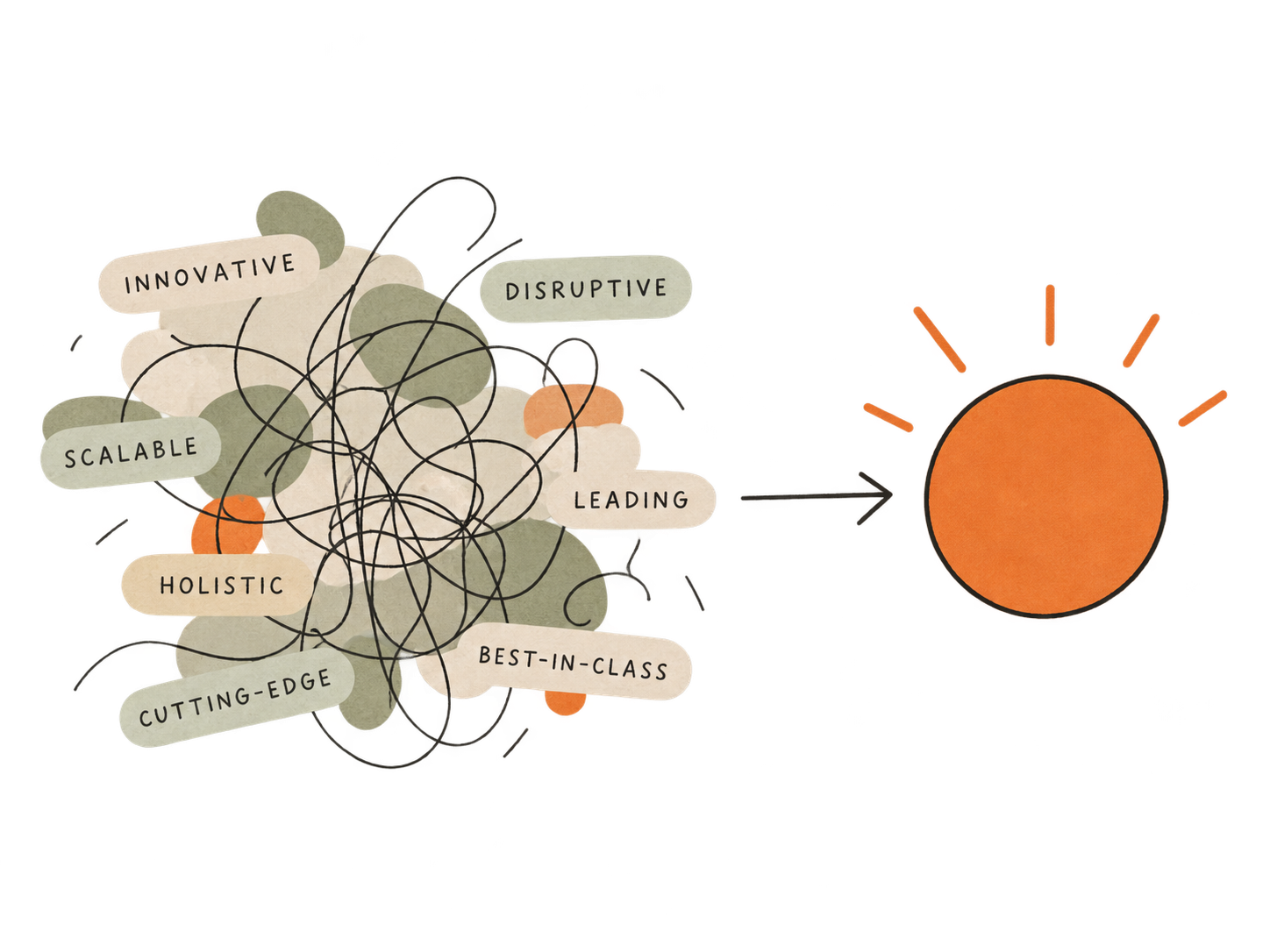
If people have to say, “It is kind of about growth, strategy, creativity, transformation…”, then you are probably trying to say too much at once.
And when you try to say everything, people usually remember very little.
You do not need to sound bigger than you are
This is another common trap.
People write as if they are a consultancy, a movement, a media platform and a transformational ecosystem all at the same time.
Usually because they want to sound established.
Stronger positioning often comes from being narrower. Say the thing more plainly. Make the scope more honest. Let the message fit the actual work.
That builds trust faster.
Especially early on, accurate language goes a long way.
Start with the problem you solve clearly
If you are struggling with positioning, start with three simple prompts:
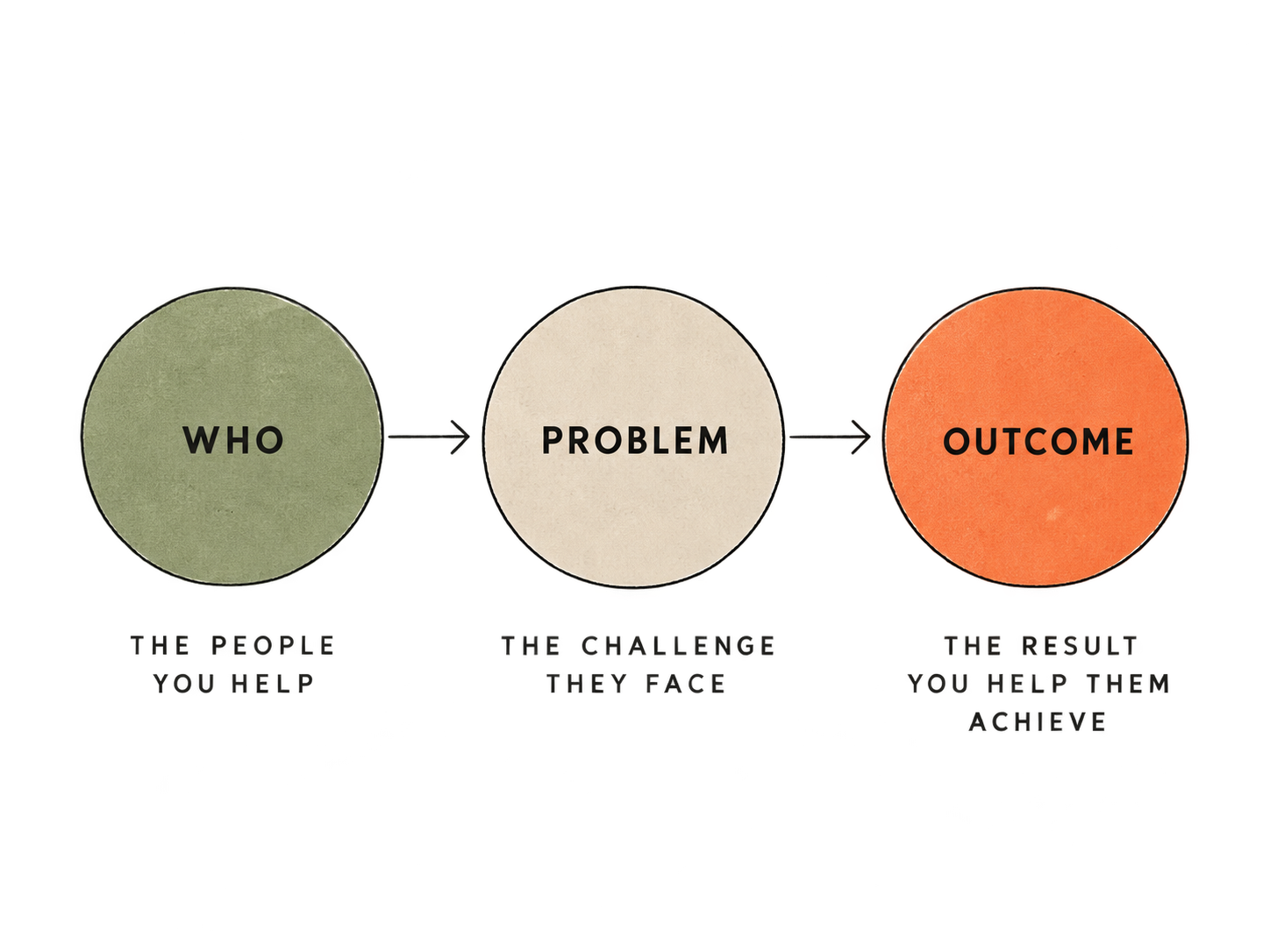
Who do I help?
Be concrete enough that a real person could recognise themselves.
What problem do I help solve?
Choose the problem you most want to be known for.
What changes after working with me?
What becomes clearer, easier, faster, calmer, more effective or more aligned?
That is usually enough to get much closer to a useful positioning statement.
Then you can shape the language until it sounds like you.
Final thought
Cleverness can attract attention.
Clarity helps people understand whether you are relevant to them.
And that understanding is what gives everything else a chance to work.
So if you have to choose, choose clarity first.
Then make it sound like you.